
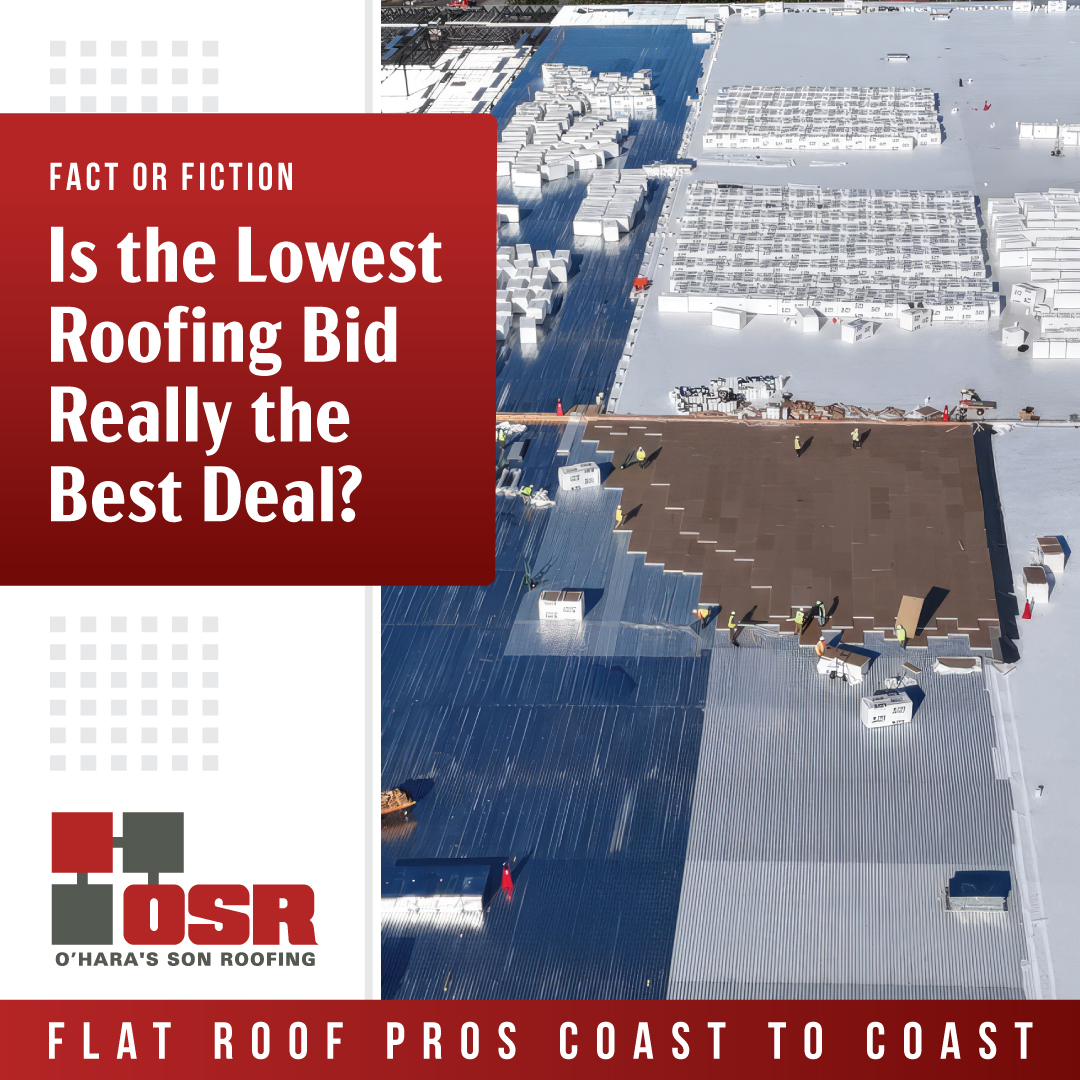
Is the Lowest Roofing Bid Really the Best Deal?
Short answer: No. The lowest bid often costs more over time. It can mean thinner materials, rushed work, and a shorter roof life, which adds up to more money spent later, not less.
FICTION: Cheaper is always better.
FACT: Price is only one part of the decision. A low number on a proposal does not tell you what is actually being installed, how long it will last, or what happens if something goes wrong.
Why the lowest bid can cost more
A low bid can mean lighter-gauge materials, a rushed installation schedule, or a crew with less training. Those shortcuts do not always show up right away. They tend to show up two or three years later as leaks, damaged insulation, or early replacement. Add in the cost of unplanned repairs and any disruption to your building’s operations, and the money “saved” upfront can disappear fast. Industry guidance recommends keeping some healthy skepticism toward the lowest bid, since price is only one factor in choosing a qualified roofing contractor. A clear written scope of work, proof of insurance, and solid warranty terms matter just as much as the price.
A better way to compare bids is total cost of ownership
Total cost of ownership, or TCO, looks at the upfront installation cost together with expected maintenance, energy performance, and eventual replacement, spread across the roof’s full service life. Paying more upfront can still mean paying less overall, if the system lasts longer, needs fewer repairs, and uses less energy.
Energy performance is easy to overlook, but it adds up. A cool roof uses a material or coating that lowers the roof’s surface temperature, which cuts down on the heat that transfers into the building below. Over time, that can mean lower air conditioning costs and less strain on your HVAC system, on top of whatever you save on maintenance and replacement.
What to ask before you choose a bid
- What materials and installation methods are included?
- What is the contractor’s safety record and insurance coverage?
- What does the warranty actually cover, and what would void it?
- Is ongoing maintenance included or available?
Compare the real cost of ownership, not just the number on page one.
Want a second look at a bid, or a maintenance plan that protects your roof investment? Contact O’Hara’s Son Roofing and we’ll walk through it with you.
For more info on selecting the right bid: