
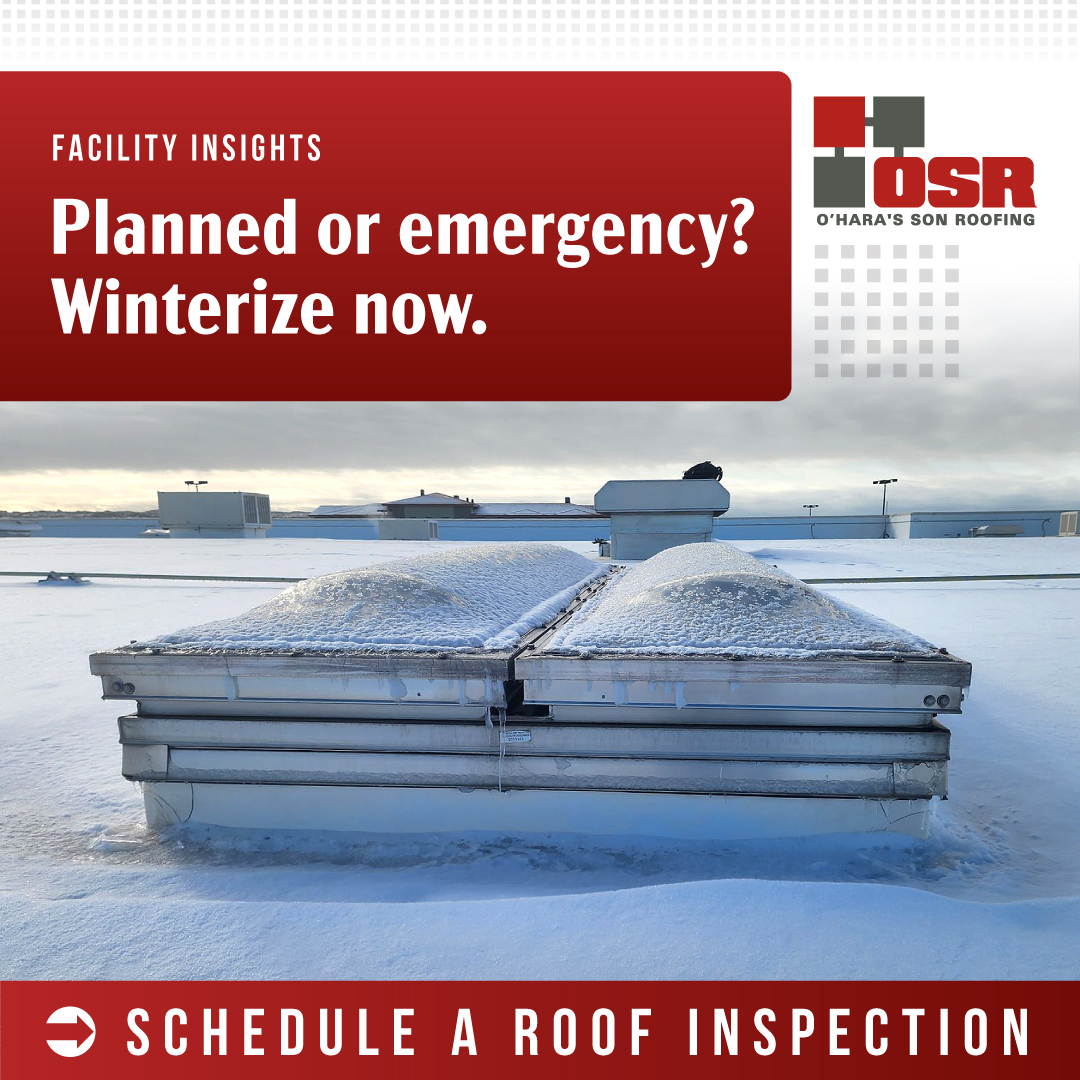
Winterizing Your Roof: A Planned Expense vs. an Emergency One
What does it mean to winterize a commercial roof?
Winterizing a commercial roof means preparing it for snow, ice, and freezing temperatures before they arrive. It includes clearing drains, sealing seams and flashing, checking rooftop equipment, and planning for snow removal. In cold-weather regions, a planned winterizing visit costs far less than an emergency leak repair in the middle of a storm.
Seasonal Maintenance | Midwest, Northeast, and Mountain regions
How does a planned winterizing visit compare to an emergency repair?
The roof work may look similar, but the conditions and total cost are very different. A planned visit happens on your schedule. An emergency call happens on the storm’s schedule.
|
Planned winterizing |
Emergency winter repair |
|
|
Timing |
Scheduled in fall, during business hours |
Nights, weekends, or mid-storm |
|
Working conditions |
Dry, safer roof surface |
Snow, ice, and wind slow work and raise safety risk |
|
Type of repair |
Permanent fixes while materials cure properly |
Often temporary patches until spring |
|
Interior impact |
None |
Possible damage to ceilings, inventory, and equipment |
|
Business disruption |
None |
Closed areas, displaced staff or tenants |
|
Budget |
Predictable, can be built into the operating budget |
Unplanned, often with premium labor rates |
The roof repair is usually just one part of an emergency bill. Interior cleanup, damaged contents, and lost operating time can cost more than the fix itself.
What winter roof risks are common in the Midwest, Northeast, and Mountain regions?
All three regions see long, cold winters, but each puts different stress on a commercial roof.
- Midwest: Frequent freeze-thaw cycles and lake-effect snow. Melting and refreezing opens small gaps at seams and flashing, and refrozen drains lead to ponding.
- Northeast: Heavy, wet snow and nor’easters that bring wind, snow, and ice together. Wet snow is much heavier than dry snow and adds load quickly.
- Mountain: Deep snowpack, strong winds, and intense sun at high elevation. Wind builds deep drifts, and strong UV can age roof materials faster.
In every region, snow tends to drift and pile up against parapet walls, changes in roof height, and rooftop units. FEMA’s Snow Load Safety Guide (FEMA P-957) identifies these as common drift locations and recommends making sure drains and downspouts are free of debris before storms.
What should a commercial roof winterizing plan include?
A good winterizing plan covers the roof itself and what you will do once snow arrives.
Before the first big storm:
- Clear drains, scuppers, gutters, and downspouts
- Seal open seams, cracked flashing, and gaps around penetrations
- Check curbs and panels on rooftop HVAC units
- Repair punctures and damaged membrane areas
- Mark drains, skylights, and roof hatches so they can be found under snow
- Document the roof’s condition with photos
During winter:
- Set a snow removal plan with a qualified roofing contractor
- Watch for warning signs of heavy snow load inside the building
- Report any leaks or ceiling stains right away
Why should snow removal be left to professionals?
Rooftop snow removal is dangerous work. FEMA recommends using a licensed, insured professional roofing contractor with snow removal experience. Crews should use fall protection, leave about 2 inches of snow on the roof to protect the membrane, and avoid sharp tools that can puncture it.
Inside the building, FEMA lists warning signs such as sagging ceilings or roof members, popping or creaking sounds, and doors that suddenly stick. If you see these signs, evacuate the area and call a professional right away.
Frequently Asked Questions (FAQ)
When should I winterize my commercial roof?
Ideally in early to mid fall, before the first hard freeze. If cold weather has already arrived, it is still worth scheduling. Many winterizing tasks can be done on dry, mild days.
Is it too late to winterize once snow has fallen?
Not always. Drains can still be cleared and some repairs made between storms. Some permanent repairs may have to wait for spring, so earlier is better.
How much snow can a commercial roof hold?
It depends on the building’s design and local building codes. Wet snow and drifts add weight faster than many people expect. A design professional or roofing contractor can help you understand your roof’s limits.
Should I have snow removed from my roof?
Only when needed, and only by trained professionals. Removal is often needed when drifts build up or when snow and ice block drains. Leave a thin layer of snow to protect the membrane.
Can winterizing be part of an Annual Service Plan?
Yes. Many building owners schedule a fall winterizing visit as part of an Annual Service Plan. That keeps the work on the calendar every year instead of waiting for a problem.
Plan your winter roof care with OSR
O’Hara’s Son Roofing (OSR) helps commercial building owners across the Midwest, Northeast, and Mountain regions prepare their roofs for winter. Our safety-trained crews handle winterizing, inspections, and snow-season service.