
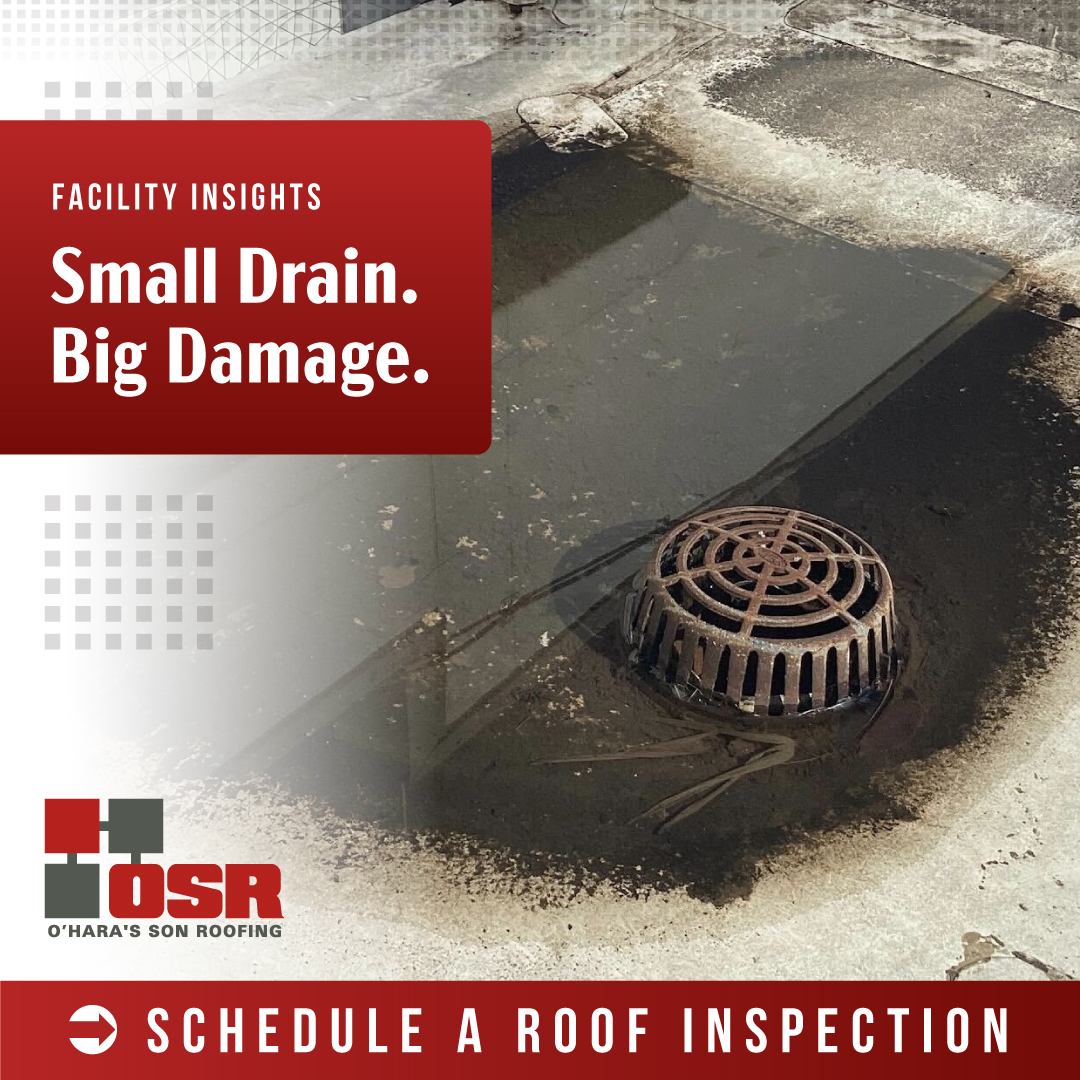
How a Clogged Drain Becomes a Six-Figure Water Damage Claim
A clogged roof drain doesn’t look like a big problem. It usually starts with leaves, gravel, or debris sitting in a drain that nobody checked in months.
Here’s how it grows. Water backs up and pools on the roof instead of draining off. Heavy rain and snowmelt can fill that pond fast, and it stays full for days after a storm. That standing water adds weight, stresses seams, and finds the smallest gap to get through.
Once water gets inside, it does not stop at the ceiling tile. It can reach inventory, equipment, server rooms, and finished interiors. For a warehouse or distribution center, that can mean ruined stock. For an office or retail space, it can mean damaged equipment, mold remediation, and lost operating days.
This is where liability comes in. Property owners and facility managers can be held responsible for tenant losses tied to water intrusion. Insurance carriers often expect proof of routine roof maintenance before they pay out on a claim, and a neglected drain can work against you during that review.
The fix is simple and cheap compared to the damage. Regular roof inspections that check drains, scuppers, and ponding areas catch these problems before they become claims. The National Roofing Contractors Association recommends inspecting your roof at least twice a year and after major storms, with drains as a top priority.
A clogged drain is a maintenance item. A water damage claim is a budget item. Don’t let one turn into the other.
Talk with OSR about a drain and drainage inspection for your property.
#CommercialRoofing #FacilityManagement #PreventiveMaintenance #PropertyManagement #RoofDrainage
Source: NRCA Consumer Information, nrca.net/roofing-guidelines/consumer-information