
The Pre-Winter Review That Keeps Emergency Calls Off Your Budget
What is a pre-winter commercial roof review?
A pre-winter roof review is a fall inspection of your commercial roof done before freezing weather arrives. A trained inspector checks drains, seams, flashing, penetrations, the membrane, and areas where water ponds. Small issues get fixed while the weather still allows it, so they do not turn into leaks and emergency calls in January.
Why does winter turn small roof problems into emergency calls?
Winter adds weight, water, and movement to a roof all at once. A loose seam or a clogged drain that seemed minor in October can become an active leak once snow and ice show up.
- Freeze-thaw cycles: Water slips into small cracks, freezes, and expands. Each cycle opens the gap a little wider.
- Blocked drains: Leaves and debris from fall trap meltwater. Standing water then refreezes and adds load to the roof.
- Snow and ice weight: Extra load stresses weak areas, especially near drains, curbs, and rooftop units.
- Harder repairs: Cold, wet, and icy conditions make repairs slower and riskier for crews. Some permanent fixes have to wait for warmer weather, so temporary patches carry you until spring.
The Insurance Institute for Business & Home Safety (IBHS) notes that seasonal weather is a major source of roof stress. Planning ahead in fall is how you keep winter repairs on your schedule instead of the weather’s.
What does a pre-winter roof inspection check?
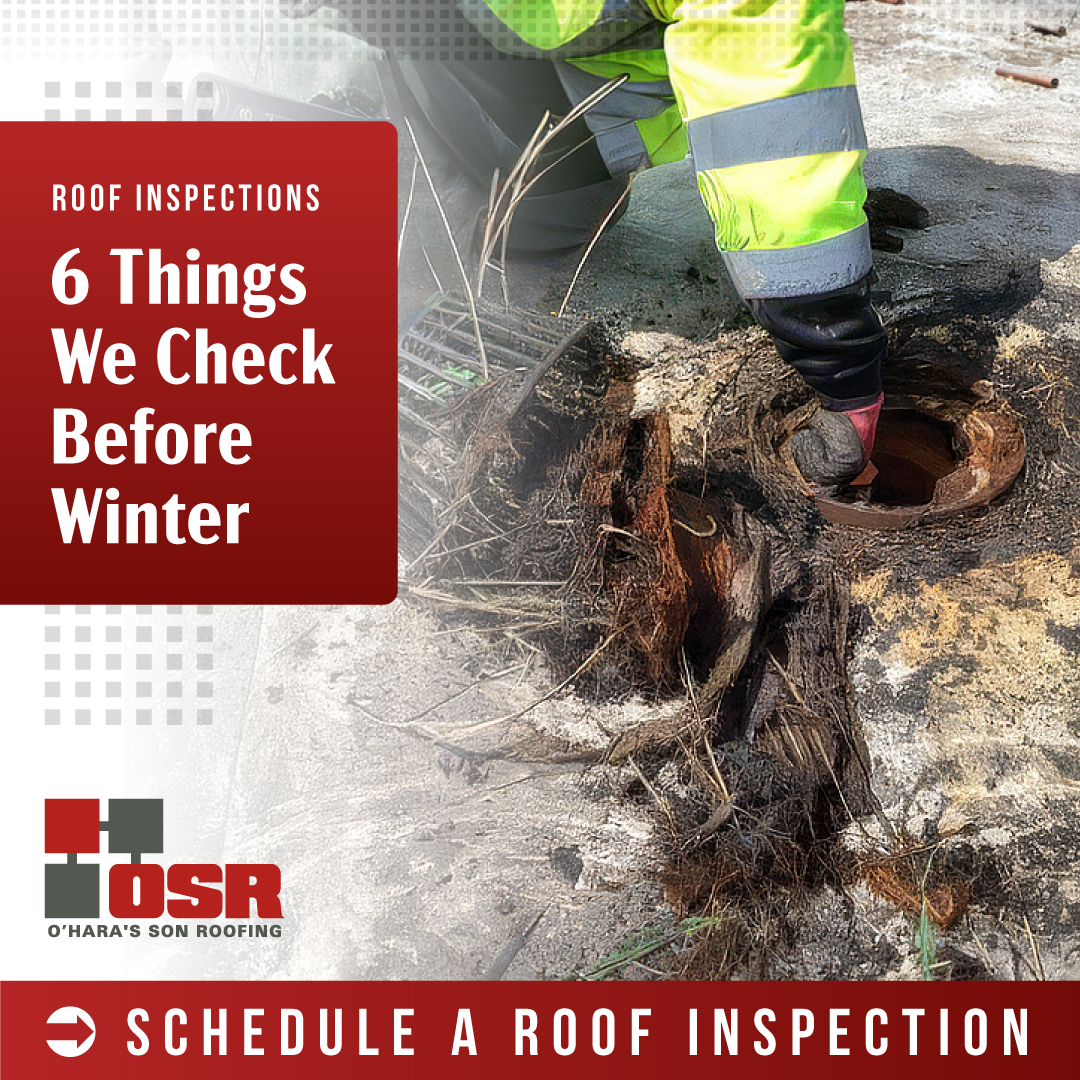
A good pre-winter review focuses on the six areas where winter leaks most often start.
| Area | What the inspector looks for | Why it matters in winter |
| Drains, scuppers, gutters | Debris, clogs, damaged strainers | Meltwater needs a clear path off the roof |
| Seams | Open, loose, or lifting seams | Water enters, freezes, and widens the gap |
| Flashing | Gaps at walls, curbs, and edges | Flashing is a common leak point under snow |
| Penetrations | Cracked seals around pipes, vents, HVAC units | Small openings let water reach the deck |
| Membrane condition | Cracks, blisters, punctures, worn areas | Weak spots fail faster under load and cold |
| Ponding water | Low spots that hold water 48 hours or more | Ponds refreeze and add weight |
The inspector should also clear loose debris, note any wet insulation, and photograph each issue. That record helps you plan repairs and supports your warranty file.
When should you schedule a pre-winter roof review?
Schedule it in early to mid fall, after most leaves have dropped and before the first hard freeze. That timing leaves room to finish repairs in workable weather. In northern states, that often means September or October. In milder regions, you may have into November.
The National Roofing Contractors Association (NRCA) recommends inspecting commercial roofs at least twice a year, typically spring and fall, and after major storms.
What happens after the review?
- You get a written report with photos, findings, and priorities.
- Urgent items are fixed first, such as open seams, failed flashing, or clogged drains.
- Lower-priority items are planned for spring or added to next year’s budget.
- Your roof history is documented, which helps with warranty requirements and long-term planning.
Many building owners fold this review into an Annual Service Plan. That way spring and fall inspections happen on schedule, and your roof gets steady care instead of crisis repairs.
Frequently Asked Questions (FAQ)
How long does a commercial roof inspection take?
Most take a few hours. Larger or more complex roofs with many rooftop units can take a full day.
Do I need a pre-winter inspection if my roof is fairly new?
Yes. Newer roofs can still have clogged drains, storm damage, or seams disturbed by HVAC service crews. Many manufacturer warranties also expect routine inspections and maintenance records.
How does a fall inspection save money?
It finds small problems while they are cheap and easy to fix. Planned repairs usually cost less than emergency calls, interior damage, and business disruption from a winter leak.
Can roof repairs be done in winter?
Some can, but cold and wet conditions limit which materials and methods work well. Crews may need to use temporary repairs until spring. That is why fall is the better time to fix known issues.
What is ponding water, and is it a problem?
Ponding water is water that stays on a flat roof for more than 48 hours after rain. In winter it can freeze, add weight, and speed up wear on the membrane.
Should I go on the roof myself to check it?
It is safest to leave rooftop inspections to trained professionals with proper fall protection. You can help by watching for interior signs like ceiling stains, drips, or musty smells, and reporting them right away.
Should I go on the roof myself to check it?
It is safest to leave rooftop inspections to trained professionals with proper fall protection. You can help by watching for interior signs like ceiling stains, drips, or musty smells, and reporting them right away.
Plan your pre-winter review with OSR
O’Hara’s Son Roofing provides commercial roof inspections and Annual Service Plans for facilities across the country. Our safety-trained inspectors check every critical area, document what they find, and help you plan repairs before winter weather sets in.